


Featured Reports
City of Pomona, CA
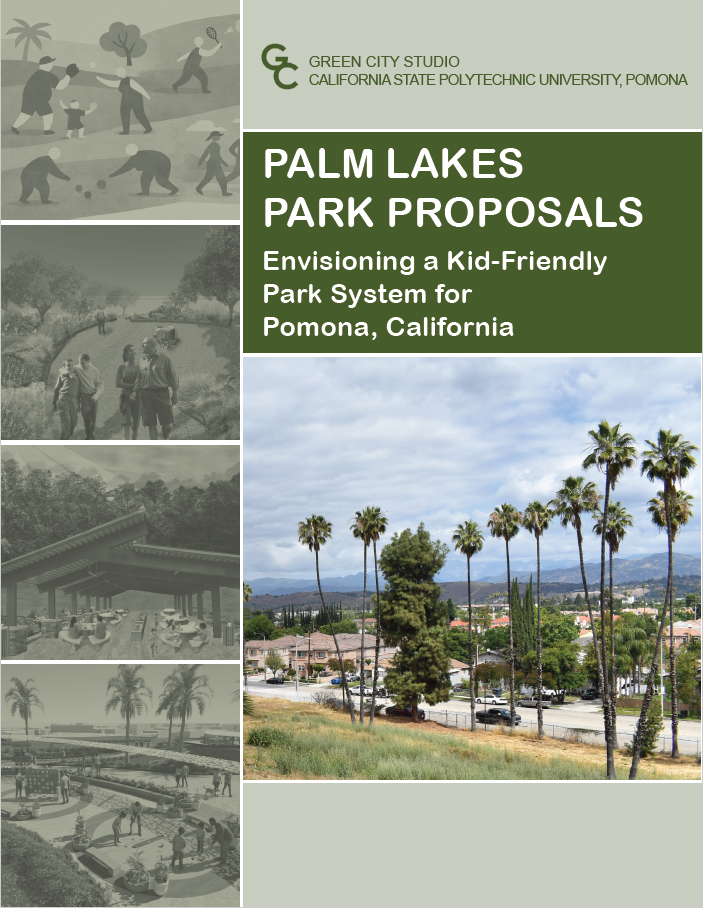
Palm Lakes Proposals: Envisioning a Kid-Friendly Park System for Pomona, California
The Green City Studio, 2026
For many years, the City of Pomona operated the Palm Lakes Municipal Golf Course, a nine-hole, executive course and driving range located on 15.8 acres in south Pomona, which closed in 2015. In 2025, Clean & Green Pomona successfully advocated for the city to designate this site as a future park. Clean & Green Pomona engaged the Green City Studio to facilitate workshops and develop a series of proposals intended to spark creative thinking within the community about the potential of this new park. The city recently received a planning grant to engage the community in the process of planning for this park. It is hoped the results of these workshops and the ideas generated by the Green City Studio will be useful in this process.
City of Pomona, CA
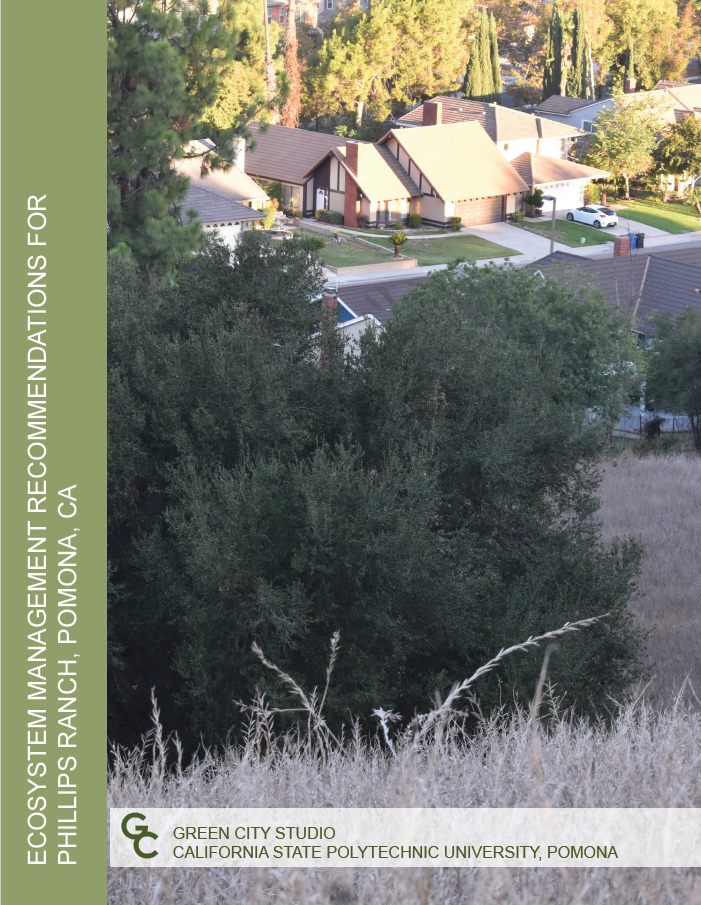
Ecosystem Management Recommendations for Phillips Ranch, Pomona, CA
The Green City Studio, 2026
Phillips Ranch was developed as a planned suburban community beginning in 1965. The public amenities, including extensive open space, were designated as public land under the ownership of the City of Pomona, but supported by a special assessment on all private properties within the Assessment District, first adopted in 1990. The amount of this assessment was fixed at the time of adoption, and has not adjusted for increased costs or increased risks associated with a landscape that has exceeded maturity. The Phillips Ranch Assessment District Oversight Committee partnered with the Green City Studio, to better understand risks and challenges facing the District. The result is this report, which outlines ecosystem management recommendations for consideration by the Oversight Committee.

City of Pomona, CA
Weaving the Social Fabric of District 2: Supporting Belonging, Well-Being, Self-Worth and Possibility in Pomona, CA
The Green City Studio, 2025
This project explores ways in which the physical environment can support this shift toward a mindset that support community momentum toward pro-social, pro-environmental priorities. A key strategy in this effort is what the author, Peter Block calls building the “social fabric’ of the city. How does the physical environment support this building of social fabric? To illuminate answers to this question, the Green City Studio partnered with Pomona City Councilmember Victor Preciado, to explore the potential for the public realm –streets, parks, schools, and other shared spaces – to support the strengthening of social fabric, and promote, belonging, well-being, self-worth and possibility in District 2, which he represents.